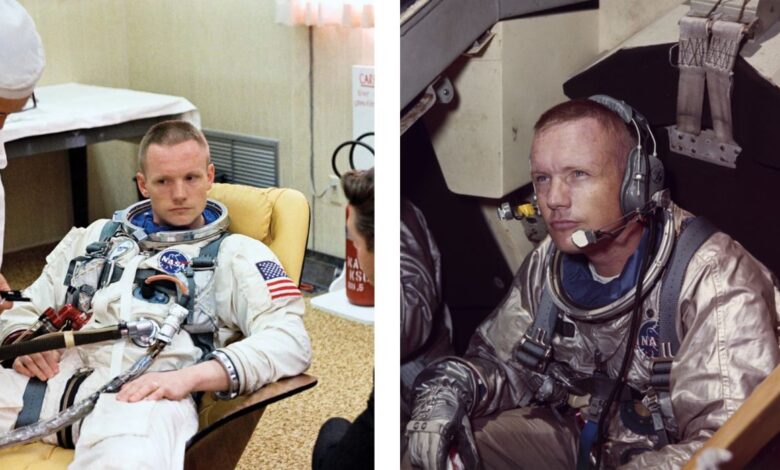
The historical narrative of space exploration features numerous courageous astronauts, yet few personalities command the universal celestial fascination and profound historical impact associated with Neil Armstrong. Born into a modest Midwestern family in Ohio during the depression era, this exceptional civilian test pilot rapidly transformed from a quiet aeronautical engineer into an architectural pillar of human spaceflight. His remarkable catalogue of experimental flight data, lunar landing maneuvers, and academic lectures bridges practical aerospace engineering with radical cosmic exploration, ensuring his timeless achievements continue to inspire scientists, aviators, and explorers across generations. From piloting the Apollo 11 lunar module to taking humanity’s first step on the Moon, exploring his extraordinary life reveals a relentless dedication to precision and a permanent imprint on global culture.
Quick Bio Section
- Full Name: Neil Alden Armstrong (Widely known as Neil Armstrong)
- Birth Date: August 5, 1930
- Birthplace: Wapakoneta, Ohio, United States
- Death Date: August 25, 2012
- Key Eras: Space Race, Cold War Era, Golden Age of Aviation
- Notable Works: Apollo 11 Lunar Landing, X-15 Test Pilot Program, Gemini 8 Docking Mission
Early Childhood and Ohio Upbringing
The formative years spent by a young Neil Armstrong in various small towns across Ohio established a complex foundation for his unprecedented aviation trajectory. Encouraged by an early fascination with model airplanes and scouting, the curious young boy explored flight mechanics, engineering books, and aerodynamics with startling intuition. Relatives and teachers recognized that ordinary childhood milestones were matched by acute spatial awareness regarding how physical machines operated. Long before traditional astronaut training began, the future commander was already internalizing engineering principles that challenged conventional education. Family guidance nurtured his natural ingenuity, steering a uniquely observant youth toward aviation without extinguishing his innate curiosity.
Early Aviation and Korean War Service
Professional and military doors across the American skies soon opened wide when the young aviator embarked on an intensive flying journey as a naval pilot during the Korean War. Aircraft carriers and combat zones watched in awe as a dedicated ensign mastered high-speed jet combat while quietly developing his signature calm demeanor under pressure. These grueling early military years exposed him to the harsh realities of combat danger, aircraft mechanical failures, and operational stress. Although these technical pursuits brought steady military acclaim, they also placed heavy demands on a reflective thinker, shaping an independent worldview that heavily influenced the personal integrity of Neil Armstrong and his lifelong commitment to aviation safety.
Moving to Edwards Air Force Base as a Test Pilot
Establishing his career as an elite civilian test pilot brought radical professional changes when the aviator chose to fly experimental rocket planes at Edwards Air Force Base in California. Leaving conventional aviation limitations temporarily provided immense organizational challenge but sparked an unprecedented shift in modern aerospace development. During this transitional phase, the visionary flew high-speed aircraft like the X-15, capturing national engineering attention. Collaborative freedom unleashed an extraordinary wave of flight data, positioning Neil Armstrong at the very forefront of supersonic aviation during the late nineteen-fifties.
The Revolutionary Milestone of Gemini 8 Docking
Seeking ultimate orbital utility and spacecraft control, the courageous pilot made the bold decision to command the Gemini 8 mission, achieving history’s first successful orbital docking with an unmanned vehicle. This revolutionary technological puzzle allowed him to manually stabilize a dangerous spacecraft spin, proving that human pilots could manage critical emergencies in space. Exhibiting his groundbreaking piloting skills under intense mission scrutiny enabled the astronaut to present a resolute defense of manual spacecraft control. Freedom from traditional automated limitations earned him immediate historic significance, positioning Neil Armstrong as a premier global spacefarer during the height of the Space Race.
Championing Lunar Landing Training and Simulator Work
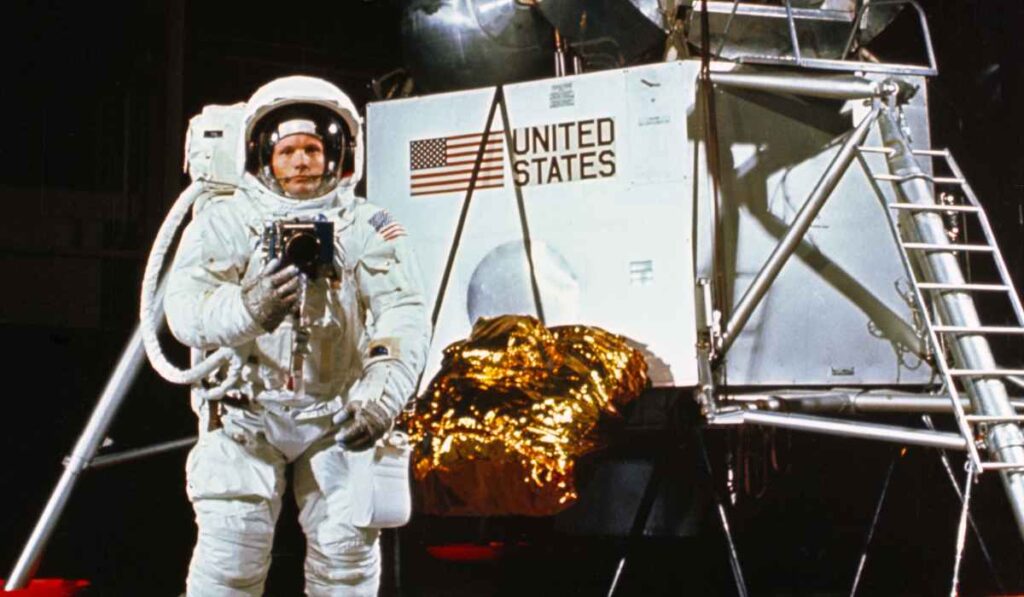
Aeronautical training underwent a radical transformation whenever the relentless pioneer practiced hazardous lunar module descents using specialized training simulators and rocket-powered test vehicles. Masterpieces of flight simulation like the Lunar Landing Training Vehicle demonstrated a sophisticated handling of complex propulsion systems fused with rigorous preparation. Historians and aerospace engineers continually marvel at how the icon balanced strict technical simulation with unconstrained operational danger. Every simulator run and emergency procedure layout was treated with calculated global importance, ensuring that Neil Armstrong elevated space pilot training to a profound exercise in mission survival.
Navigating Space Race Pressures and Apollo 11
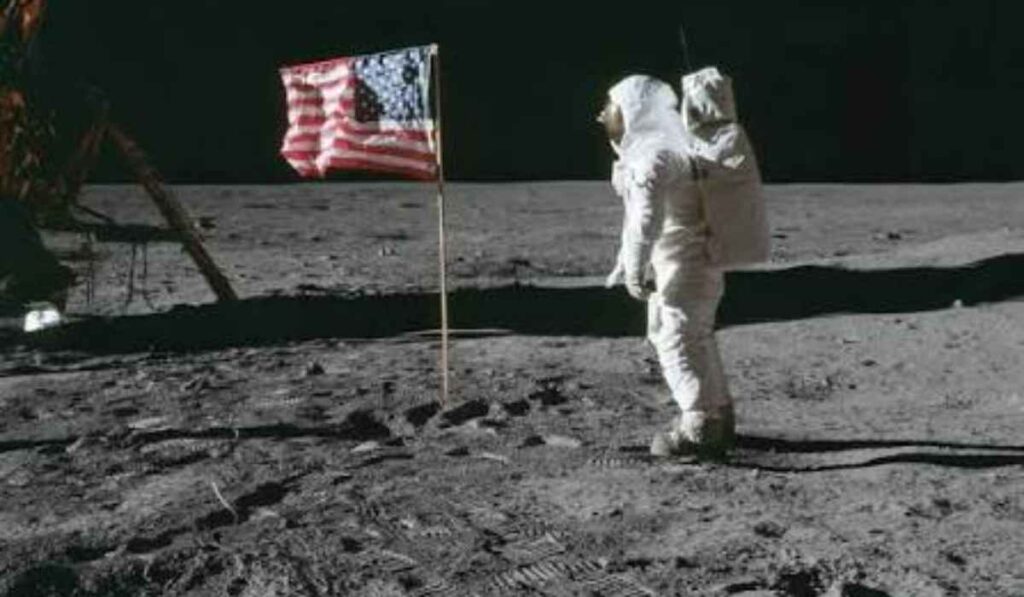
Creative cosmic exploration and profound professional resilience reached new heights as the American commander faced intense global media scrutiny, national expectations, and the ultimate pressure of landing on the Moon. These historic moments established a dynamic dialogue between national pride, scientific ambition, and lunar exploration, balancing technical checklist execution with high-stakes historical pressure. Viewers and biographers studying his surviving mission transcripts were consistently astounded by how fluidly Neil Armstrong integrated precise engineering commands with sweeping human statements. Historians frequently cite these particular space missions as the blueprint for modern exploration, proving that he understood composure just as well as orbital mechanics.
Inspiring the World with One Small Step
The international exploration frontier provided an ideal medium where the prolific astronaut could merge precise piloting with a profound rededication to human discovery. Teaming up with his own deep sense of professional duty allowed him to step onto the lunar surface, broadcasting humanity’s most famous words across the globe. Works exploring lunar geology, space science, and global unity flowed effortlessly from the monumental achievement of Neil Armstrong. Citizens today still find endless depth in these cosmic contributions because Neil Armstrong captured authentic exploration goals through quiet humility that remains unmatched across global history.
Navigating Public Scrutiny and Post-Apollo Life
Beyond stable NASA administration, the visionary icon faced a turbulent period of relentless media attention, public adoration, and the complex challenge of returning to private life after achieving global fame. These historic pressures highlighted his deep desire for privacy and forever altered how the public understood his modest personality. Scholars participating in biographical analysis often describe this mature phase as a crucible of immense public testing. Balancing academic professorships with corporate board responsibilities became a daily reality, proving that Neil Armstrong commanded both brilliant public output and relentless inner resilience.
Expanding Academic and Engineering Contributions
Despite widespread public demands and heavy attention, later life for the astronaut involved teaching aerospace engineering at the University of Cincinnati and serving on national accident investigation boards. Global aviation committees, rising technical safety reviews, and educational plans often required his direct presence in boardrooms and classrooms. Yet, physical aging rarely stifled the progressive vision of Neil Armstrong, who continued advocating for sound engineering principles at a meticulous pace. University students and national leaders frequently relied on his evolving influence, highlighting how vital his technical authority remained in American scientific reform.
The Eternal Appeal of Humility and Precision
Wisdom and personal determination also occupied a significant place in his legacy, even as his global fame reshaped modern exploration. Eloquent lectures, famous rare interviews, and public engineering reports showcased his profound respect for factual truth and careful craftsmanship. Intellectual and emotional rigor blended smoothly with practical pragmatism whenever Neil Armstrong addressed the complex scientific questions of his era. These historical transcripts remind scholars that he possessed a remarkably diverse public presence, drawing inspiration from both rigorous engineering and deep personal focus.
Archival Preservation and Cultural Impact
Personal dedication and deep material preservation arrived when historians, museums, and national foundations accumulated massive collections of his flight logs, spacesuits, and mission documents. Their organization controlled thousands of pages of notes during frantic biographical exhibitions. These accumulated archives offered vital raw material while researchers navigated fickle historical markets. Following his peaceful passing, archivists and museum curators worked tirelessly to preserve these records, ensuring that his exploratory legacy remained an invaluable resource for modern researchers and historians.
Working Habits Amidst Infinite Dedication
Concentrating on complex technological problems seemed to require an insatiable mechanical appetite for the prolific astronaut, who frequently reviewed flight schematics and aerodynamic data with meticulous care. Biographers noted that he could analyze engine performance and orbital trajectories for hours on end without resting, driven by an astonishing professional stamina. Such wide-ranging responsibility meant Neil Armstrong occasionally pushed his physical endurance to the absolute limit. These historical discussions about technical stress proved that he valued scientific accuracy far above personal comfort.
The Cultural Impact of the First Man on the Moon
Cultural society reached a thrilling apex when the brilliant aviator embraced space exploration, engineering precision, and quiet dignity, earning him the enduring title of the First Man on the Moon. The resulting cultural atmosphere combined technical prestige, scientific innovation, and deep universal aspiration into an accessible global identity. Citizens across the world immediately embraced the striking lifestyle changes secured through the space missions of Neil Armstrong. This beloved foundational aesthetic proved that devoted individuals could effortlessly bridge mechanical piloting and global scientific inspiration, creating a lasting legacy that remains a cornerstone of global educational curricula today.
The Mystery of Exploration and Ultimate Legacy
The final months of a brilliant life brought a haunting, profound historical question that consumed the inquisitive energy of the global scientific community. Challenged by declining health and a rapidly changing technological landscape, Neil Armstrong famously championed the future of commercial spaceflight and NASA funding in his final public statements. Dark, swirling themes of physical frailty and cosmic progress filled his final discussions as she—or rather, he—analyzed the heavy cost of pioneering innovation. Although fully aware of his advancing age, this body of work stands as a poignant reminder of how carefully Neil Armstrong documented the changing technical soul of modern society.
Final Days and Untimely Passing
Tragedy struck the global community when the famous astronaut passed away following complications from cardiovascular surgery in Cincinnati, Ohio, on August 25, 2012, at the age of eighty-two. A quiet physical decline brought a peaceful end to a life that had successfully expanded humanity’s reach into the cosmos, plunging the globe into profound mourning. Memorial tributes and historical retrospectives quickly surrounded the passing of Neil Armstrong, though records point primarily to natural health causes. Despite his mortal departure, the sheer volume and quality of aerospace work left behind ensured his name would echo across eternity.
Posthumous Reputation and Aerospace Icon
Decades following his death, the historical standing of Neil Armstrong evolved from a celebrated living explorer into a universally revered titan of modern science. International space agencies and modern engineers studied his flight methodology with devotion, viewing his career as an unmatched benchmark of courage and skill. Early biographers sought to untangle the media myth from the human pilot, cementing the cultural dominance of Neil Armstrong in global educational curricula. Educational institutions worldwide adopted his engineering standards as the definitive benchmark for space exploration, ensuring his concepts remained household terms for centuries.
Influence on Subsequent Generations of Explorers
The ripple effects generated by Neil Armstrong touched nearly every major space agency, aeronautical research firm, and engineering enterprise that emerged during subsequent centuries. Modern public figures explicitly built upon his aviation frameworks while challenging institutional boundaries, acknowledging the monumental groundwork laid by Neil Armstrong. Analytical study of space exploration always loops back to the conceptual breakthroughs pioneered by him. Aspiring creators continue to find that mastering the precise mindset of Neil Armstrong serves as the ultimate test of cross-disciplinary experimentation and exploratory courage.
Modern Media and Pop Culture Presence
Popular culture frequently revisits the striking historical legacy and memorable moments associated with Neil Armstrong through global cinematic adaptations, biographical literature, and digital archives. Historical documentaries and astronomy courses popularize his revolutionary career, introducing millions of new students to his impact. Advertising campaigns, space museums, and modern engineering principles regularly leverage concepts popularized by Neil Armstrong, proving the enduring cultural viability of his ideas. Digital preservation efforts also guarantee that high-resolution archives of his lunar landing remain accessible to global researchers instantly.
Preserving the Archival Legacy Today
International archives, aerospace foundations, and dedicated cultural exhibitions now safeguard the remaining physical flight manuals, spacesuits, and original documents associated with Neil Armstrong. Scholarly institutions continuously publish comprehensive critical editions to verify authenticity and restore historical context for modern researchers studying his life. Tourism boards in Ohio and Washington D.C. maintain his childhood homes, spacecraft exhibits, and memorial sites as vibrant cultural shrines visited by millions annually. Through these rigorous preservation efforts, the exploratory spirit and historical footprint left by Neil Armstrong continue to thrive in the modern digital age.
Frequently Asked Questions
- When was Neil Armstrong born and when did he die?
- Neil Armstrong was born on August 5, 1930, and passed away on August 25, 2012, at the age of 82.
- What historic space mission was commanded by Neil Armstrong in July 1969?
- He commanded the Apollo 11 mission, which achieved the first manned lunar landing.
- What famous words were spoken by Neil Armstrong upon stepping onto the lunar surface?
- He famously stated, “That’s one small step for [a] man, one giant leap for mankind.”
- Which high-speed experimental aircraft was famously piloted by Neil Armstrong prior to joining NASA?
- He flew the North American X-15 rocket-powered research aircraft as an elite civilian test pilot.
- In what branch of the United States military did Neil Armstrong serve during the Korean War?
- He served as a naval aviator and pilot in the United States Navy.