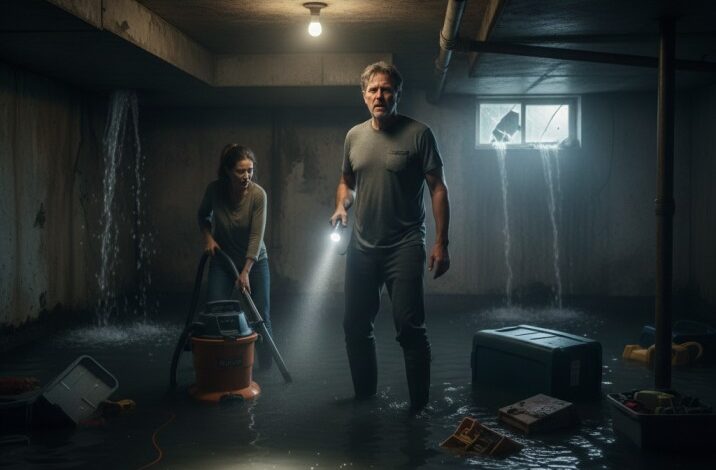
It’s late, you’re half-asleep, and then you hear it: dripping, rushing, or a sump pump alarm. You flip on the basement light and see water spreading across the floor.
A flooded basement at night is stressful—but you can handle it. This guide walks you through what to do right now, what to avoid, and how to reduce damage until help arrives.
First: Make It Safe (Before You Touch Anything)
1) Don’t go down if there’s any chance of electricity in water
If water is near outlets, appliances, your electrical panel, or cords, stay upstairs and treat it as dangerous.
- If you can safely access your breaker panel (dry area): shut off power to the basement.
- If the panel is in the basement or you’re unsure: don’t risk it—call your utility’s emergency line or an electrician.
Pro tip: If you smell gas or hear hissing, leave the house and call emergency services.
2) Stop the source if you can (only if it’s safe)
If it’s clearly a plumbing issue and you can reach it without stepping into water:
- Turn off the main water shutoff (or the shutoff for the specific fixture).
- If it’s an appliance (water heater, washer), turn off the water supply valve.
If the flooding is from heavy rain or groundwater, you may not be able to “stop” it—but you can still limit the damage.
Then: Control the Water and Prevent More Damage
3) If you have a sump pump, check it immediately
Common nighttime sump pump problems:
- The pump lost power (tripped breaker, unplugged cord)
- The float is stuck
- The discharge line is frozen/clogged
- The pump failed
If it’s safe and dry enough to check:
- Make sure it’s plugged in (ideally into a GFCI outlet)
- Confirm the float can move freely
- Look for a blocked intake or discharge
Pro tip: If you have a backup battery pump, verify it’s running. If not, you may need a portable pump.
4) Move what matters most—fast
Even 1–2 inches of water can ruin belongings.
Focus on:
- Electronics, power strips, extension cords
- Cardboard boxes (they soak up water fast)
- Photos, documents, keepsakes
- Rugs, fabric items, upholstered furniture
If possible, lift items onto shelves or place them in plastic bins.
5) Start removing water (if it’s safe)
At night, your goal is damage control, not a full restoration.
Options:
- Wet/dry vacuum (only in shallow water and dry conditions)
- Portable utility pump with a hose (best for larger amounts)
- Towels and mops for small areas
If the water is rising quickly or you can’t keep up, call an emergency water damage restoration service.
Drying Starts Tonight (Even If Cleanup Can Wait)
6) Ventilate and dehumidify as soon as you can
Mold can begin growing in as little as 24–48 hours when materials stay wet.
Do what you can tonight:
- Run fans (aimed across wet areas, not straight down into water)
- Turn on a dehumidifier if you have one
- If outdoor humidity is lower, open windows a crack (weather permitting)
Pro tip: If the basement is humid and warm, drying is harder—dehumidification becomes even more important.
7) Pull up what traps moisture
If you can safely do so:
- Remove wet rugs and hang them to dry
- Lift the corners of the carpet to let air underneath
- Take out wet padding (padding often can’t be saved)
If drywall is wet, don’t panic—but know that water-wicking drywall may need to be cut out later to prevent mold.
Document Everything (Yes, Even at 1:00 AM)
8) Take photos and notes for insurance
Before you throw anything away:
- Take wide photos of the whole area
- Take close-ups of damaged items
- Note the time, what happened, and where the water came from
If you have homeowners’ insurance, these details can save you headaches later.
When to Call for Emergency Help
Call a 24/7 restoration company right away if:
- Water is more than a couple of inches deep
- There’s sewage (black/gray water) or a strong odor
- The water is spreading quickly
- You see water near electrical systems
- You can’t identify the source
If it’s a burst pipe you can’t stop, call a plumber immediately.
Common Mistakes to Avoid
Mistake 1: Walking into water before shutting off power
Do this instead: Treat it as energized until you’ve confirmed power is off and the area is safe.
Mistake 2: Waiting until morning to start drying
Do this instead: Start airflow and dehumidification tonight—mold prevention is time-sensitive.
Mistake 3: Keeping wet cardboard boxes or fabric items in place
Do this instead: Get them out or elevate them immediately. They trap moisture and grow mold fast.
Mistake 4: Trying to “fix” a failed sump pump without a backup plan
Do this instead: If it’s not an easy reset, switch to a portable pump and call for service.
Mistake 5: Tossing damaged items before documenting
Do this instead: Photograph first, then discard anything unsalvageable.
Quick Nighttime Flooded Basement Checklist
Use this as your “do it in order” list:
- Stay safe: avoid basement if electricity may be involved
- Shut off power to basement (only if safe)
- Stop the water source (main shutoff / appliance valve) if possible
- Check sump pump and power supply
- Move valuables up and off the floor
- Remove standing water (vac/pump) if safe
- Start drying: fans + dehumidifier + ventilation
- Take photos and notes for insurance
- Call plumber/restoration if water is rising, contaminated, or widespread
FAQs
How long do I have before mold becomes a problem?
Mold can start in 24–48 hours on wet materials. The sooner you dry things out, the better your odds.
Should I use a fan if there’s still water on the floor?
Only if it’s safe (no electrical risk). Fans help once you’re actively removing water and want to speed drying.
What if it’s sewage or smells bad?
That’s contaminated water. Avoid contact, keep kids/pets away, and call a restoration pro—this typically isn’t a DIY cleanup.
Final Thoughts
A flooded basement at night is overwhelming, but your first job isn’t perfection—it’s safety, stopping the source, and starting the clock on drying. Even small steps tonight can prevent bigger repairs later.
If you want to reduce the chances of this happening again, consider a sump pump checkup, a battery backup, and a simple leak alarm near problem areas.